Rackwell strength set logger
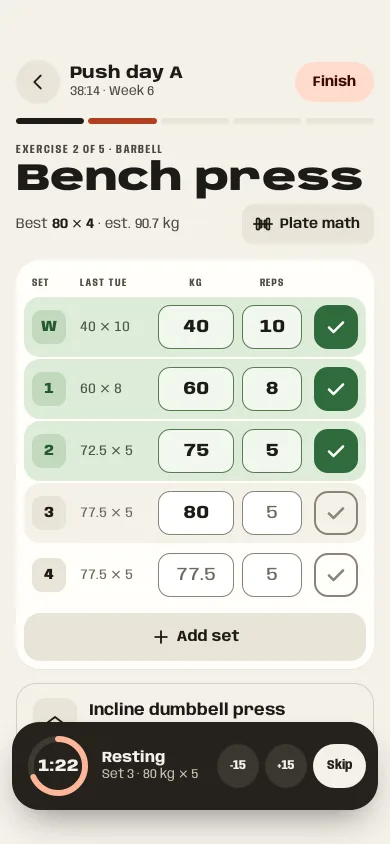
A bench-press logger: set rows with last session's numbers as ghosts, a rest ring that starts on each tick, a plate-math sheet and a squash-pop personal best.
Style
A bench-press logger: set rows with last session's numbers as ghosts, a rest ring that starts on each tick, a plate-math sheet and a squash-pop personal best.
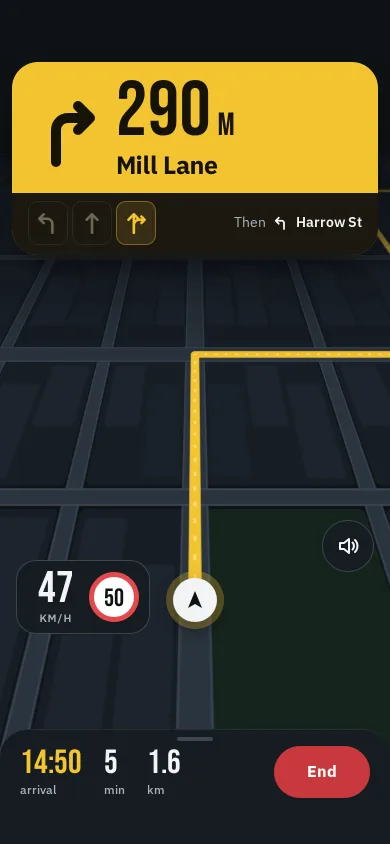
Night-drive guidance: a signal-yellow manoeuvre card with a live countdown, lane arrows, a tilted SVG city map, a calm re-route banner and a speed plate.
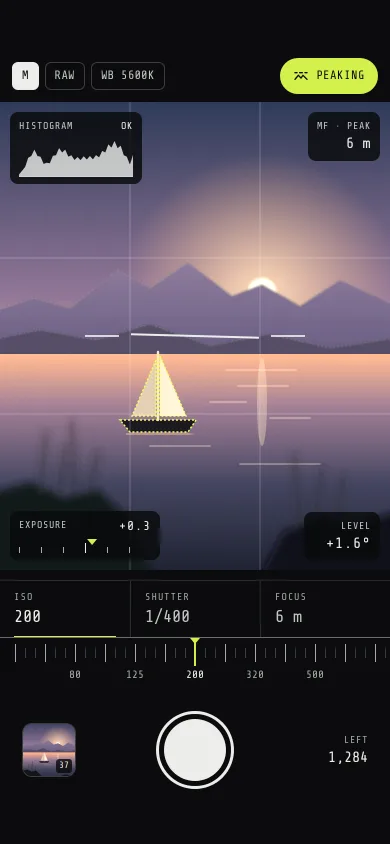
A pro camera screen: a layered dusk-lake viewfinder, detented ISO, shutter and focus dials, a live histogram, focus peaking, a level and a flying thumbnail.
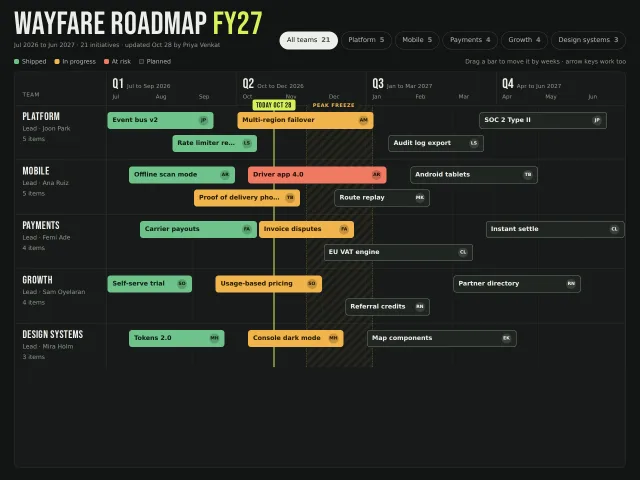
A dark product roadmap: four quarters across, team swimlanes down, status-coloured bars you drag along time by weeks, a today line, a freeze band and a team filter.
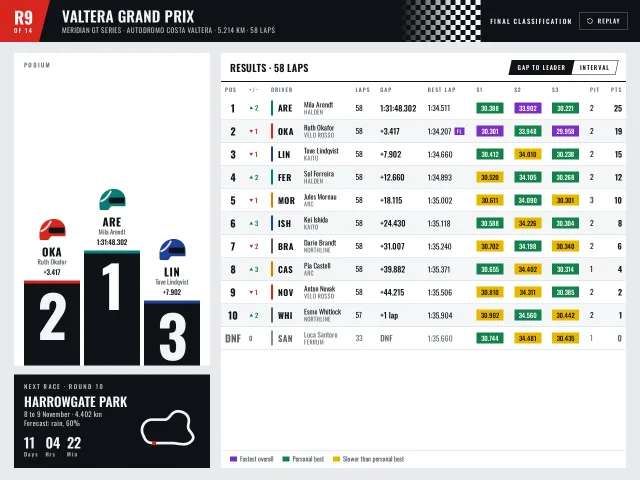
A broadcast-style results screen: a rising podium with giant numerals, a lap table with purple, green and yellow sectors, gap or interval, and a next race card.
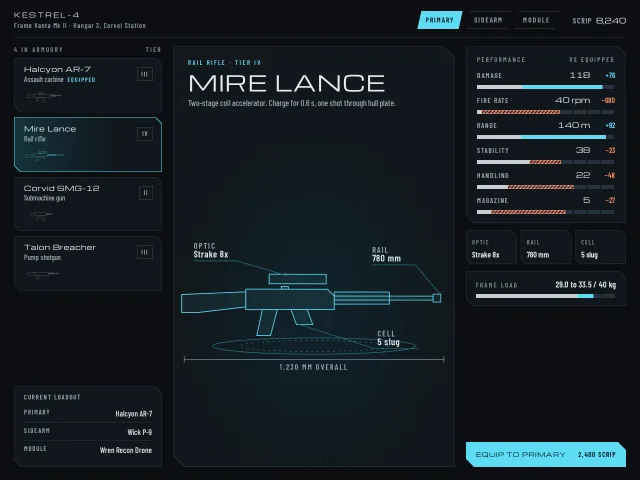
A sci-fi armoury: cut-corner panels, a weapon and module list, a hologram drawn in SVG that redraws on swap, and stat bars that show gains and losses.
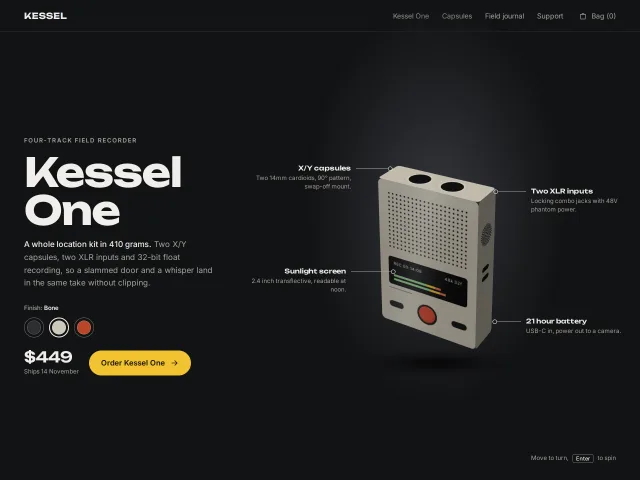
A shop hero for an invented field recorder built from six CSS 3D faces that turns toward the pointer on a spring, shades each face from one light, and pins four spec callouts.
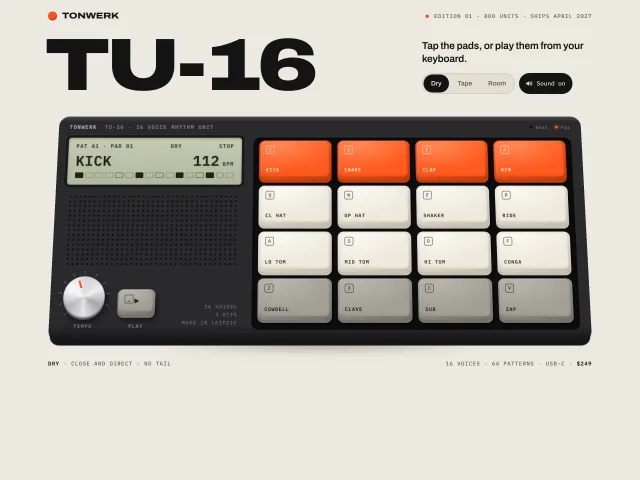
A hero where the product is the demo: a pocket drum machine in HTML/CSS with rubber pad depth, key-mapped pads, an LCD echo, a tempo knob and synthesized drums.
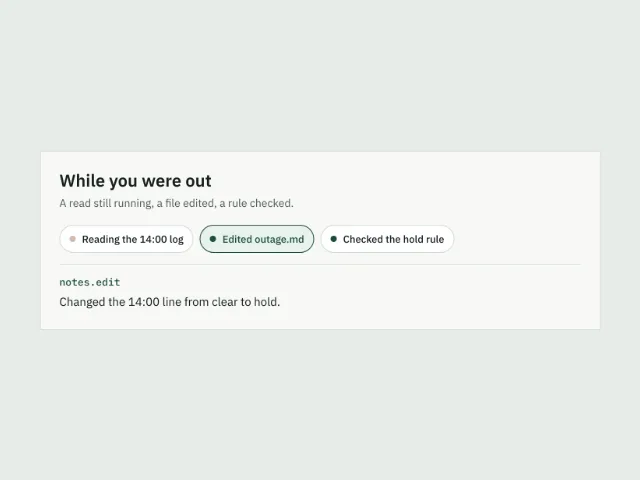
Three chips for a read, an edit, and a rule. Opening one shows a single line. The list does not expand.
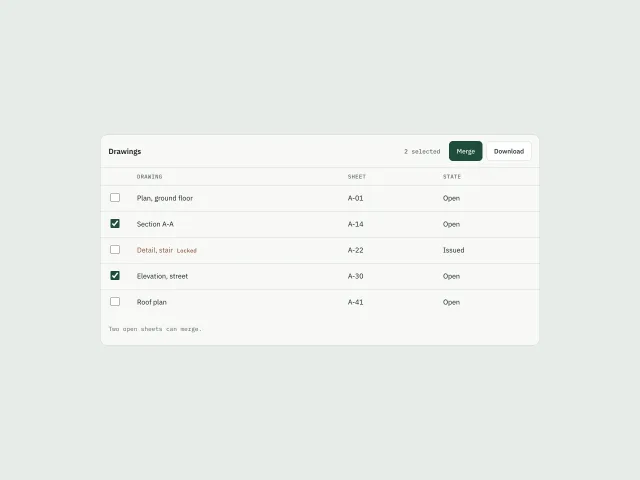
Zero rows shows Filter. One row shows Open, Rename, Download. Two open rows show Merge. A locked row leaves only Download.
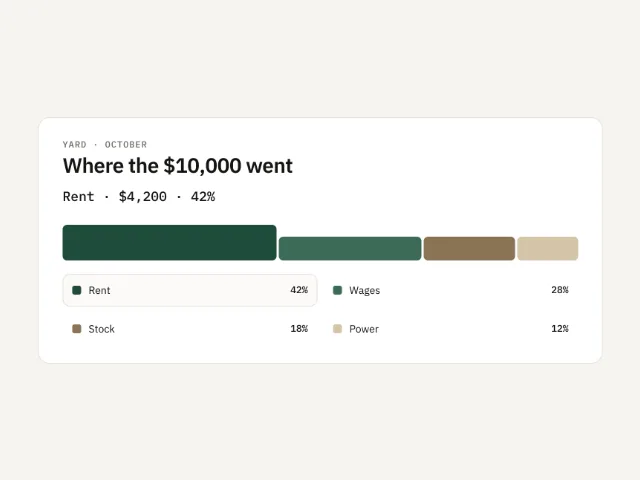
A single bar in four shares of one total. The selected share grows to 48px. The readout names the amount. There is no ring.
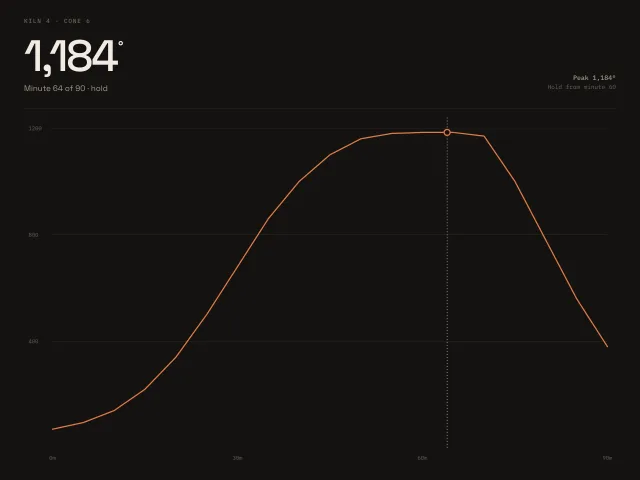
A 90 minute kiln curve. Drag or press an arrow key. The big number is the degree at that minute.
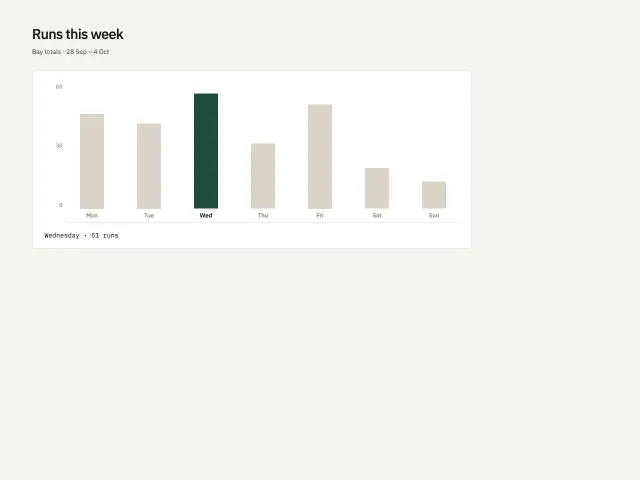
Seven bars for a yard week. One series, one selected day, and a mono readout. No legend, no second colour, no chart theme.
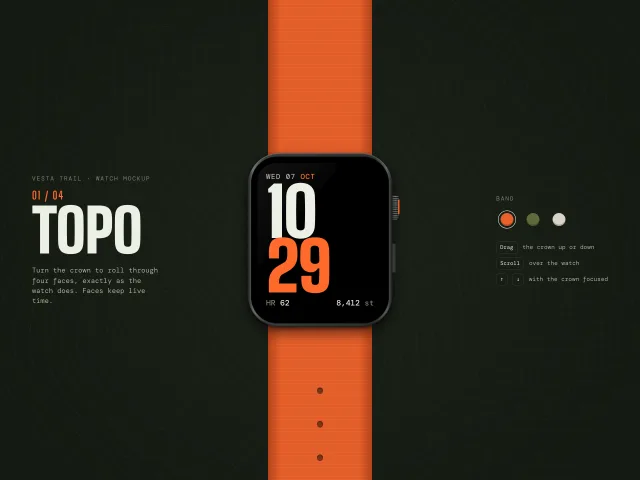
A CSS smartwatch with strap, crown and side button; turn the crown (drag, scroll, arrows) to roll through four live faces with snap and rubber-banding.
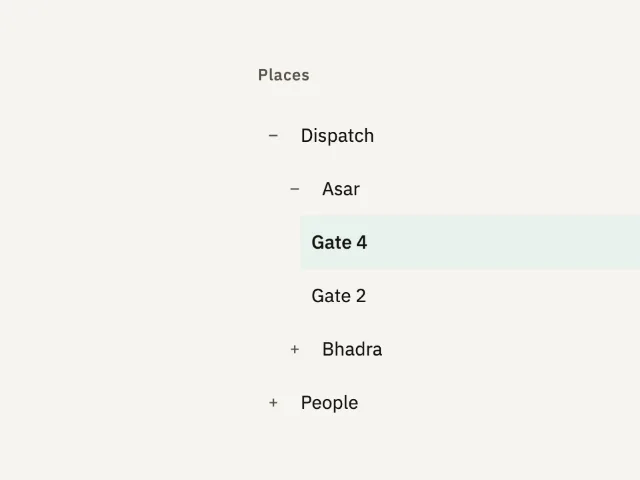
A place tree. Dispatch and Asar start open, Gate 4 is current, and Bhadra and People start closed. A click opens a branch or moves the current page.
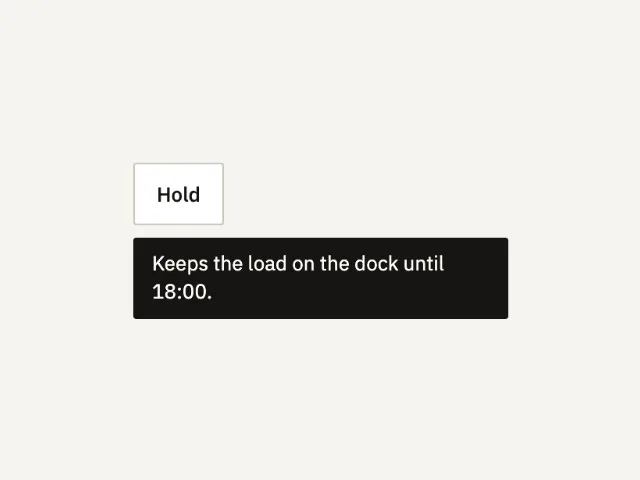
Hold describes itself: the tip says the load stays on the dock until 18:00. It starts open, and it follows hover and focus.
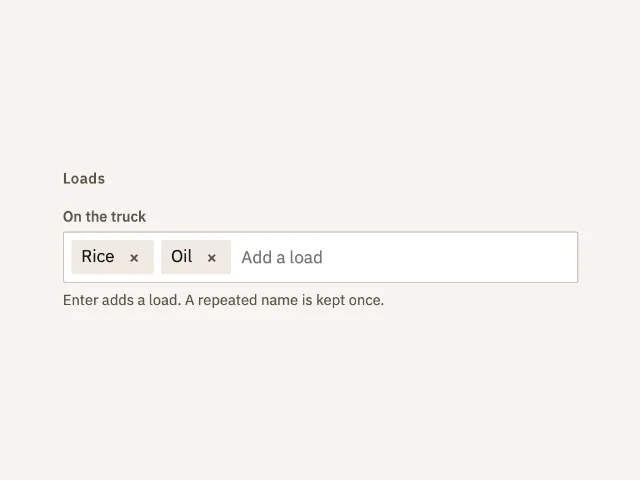
Rice and Oil start on the truck. Enter adds a load once. A remove control drops one. Backspace on an empty field drops the last.
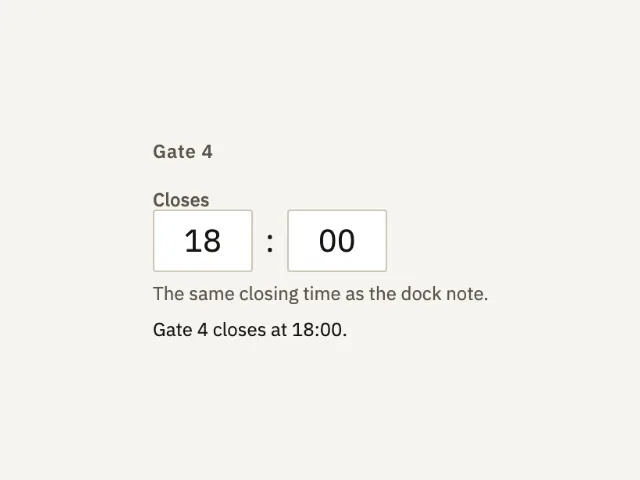
Hour and minute for when Gate 4 closes. It starts at 18:00, the same time as the dock note, and rejects an hour or minute that cannot exist.
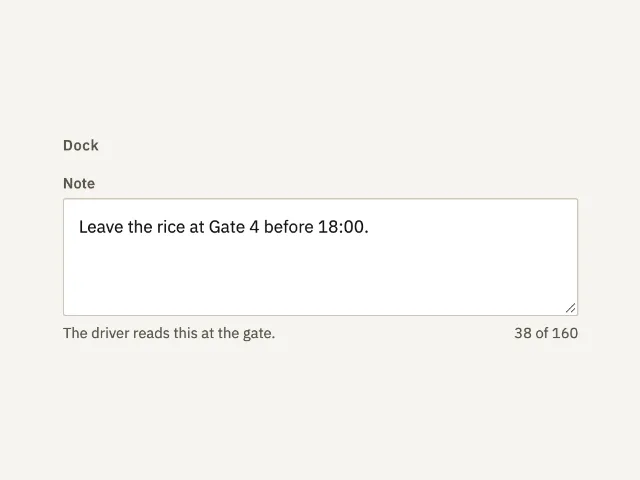
A dock note with the hint under it and a count of 160. Past 160 the hint yields to the error and the border turns danger.
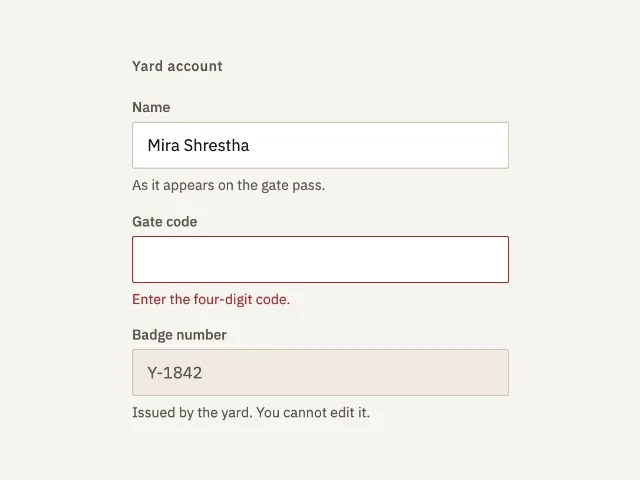
Three account fields: a name with a hint, a gate code in error until it is four digits, and a badge number that cannot be edited.
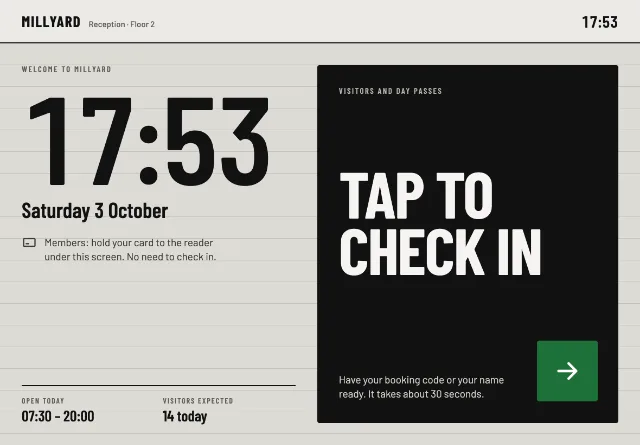
A front-desk check-in kiosk: tap-to-start attract screen, code or name search on a big keypad, confirm card, badge print with progress, and a 10s auto-reset.
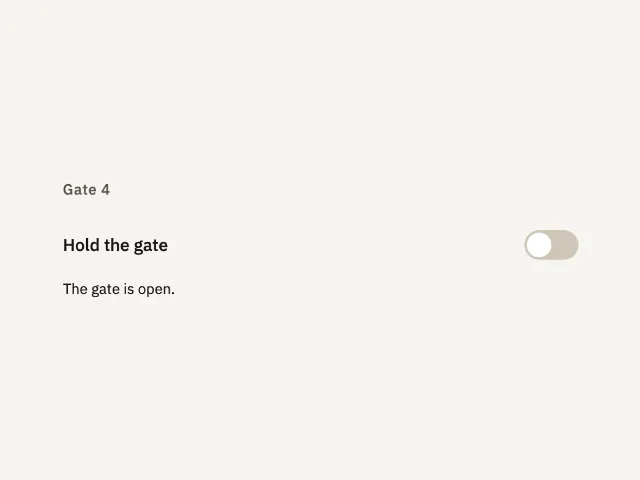
One setting, Hold the gate. It starts off, the gate stays open, and turning it on says the gate is held.
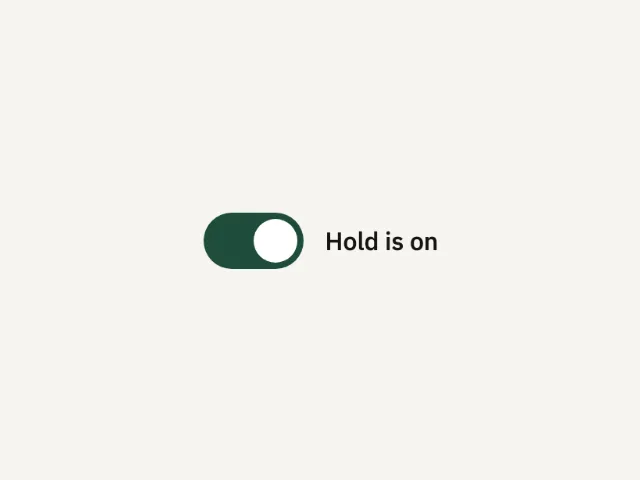
Hold starts on. Press the thumb and it widens. Release and it slides. The label says on or off.
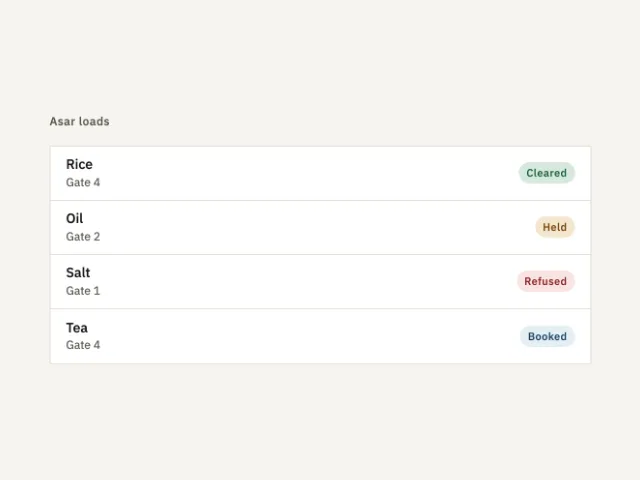
Four loads, four different states. Cleared, Held, Refused, and Booked each use their own wash and the ink that sits on that wash.
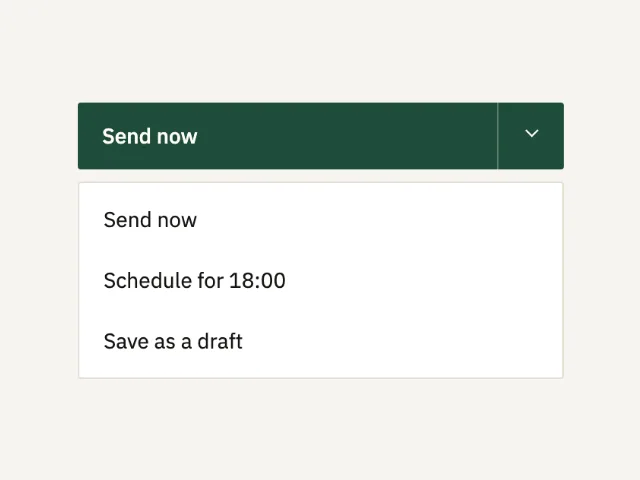
One primary action and a 44px chevron that opens three related ways to send the same note.
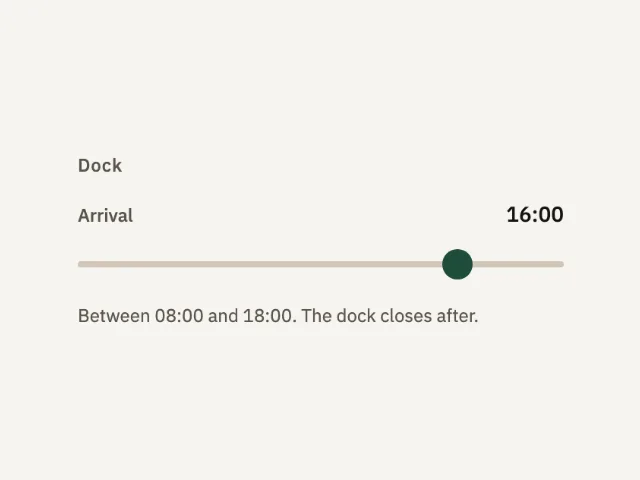
A dock arrival from 08:00 to 18:00. The thumb starts at 16:00. The value sits beside the label and updates as the thumb moves.
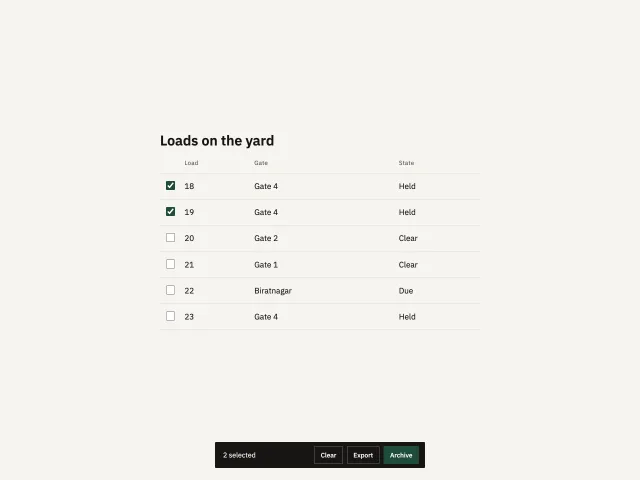
Checking loads raises a dark bar: the count, Clear, Export, and Archive. Zero checks hides it.
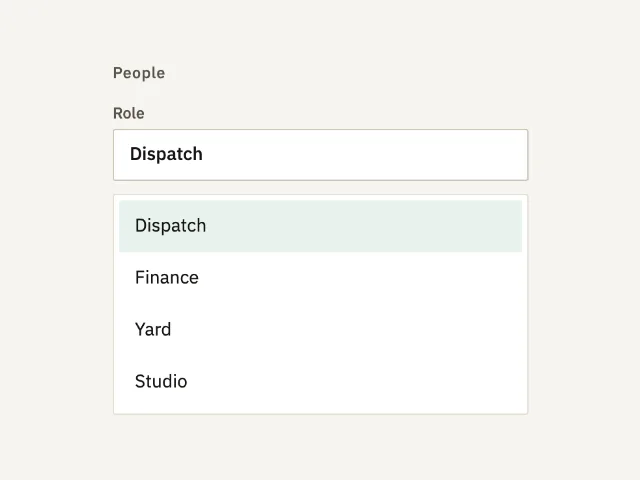
A closed list of roles. The field matches the other controls. The list uses the same radius. Empty submit puts the error under the field.
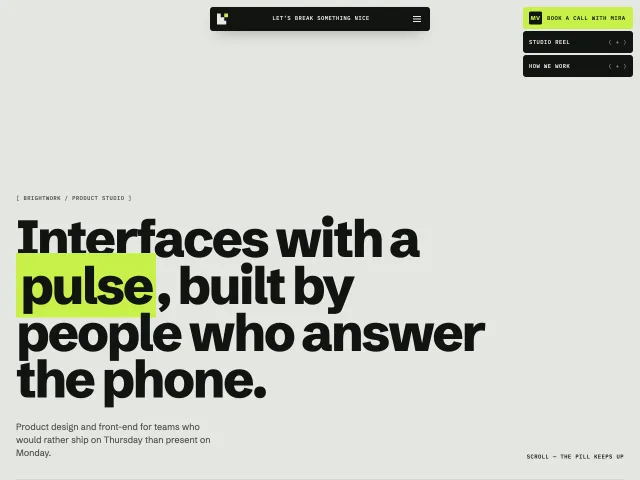
A dark floating nav pill whose centre tagline rolls to a new cheeky line per section, opens into a menu drawer, and sits beside a stack of collapsible cards.
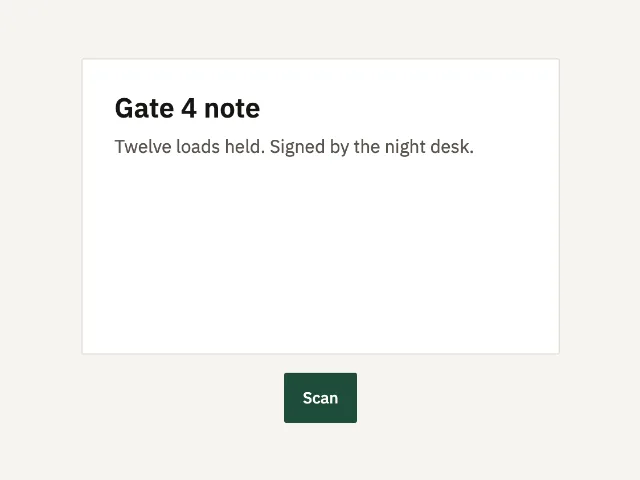
A note sits on the desk. Scan runs a green beam down the sheet, then reports two lines read.
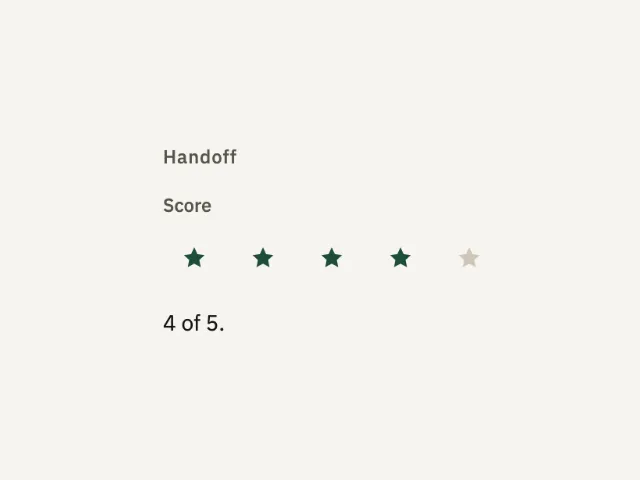
Five marks for the handoff. Four start filled. Choosing another mark rewrites the line to that score of 5.
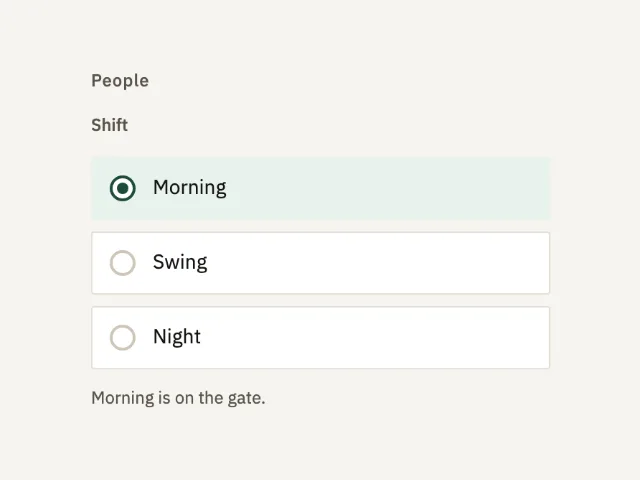
Three shifts in one fieldset. Morning starts selected. Arrow keys move the choice. The status line names the shift on the gate.
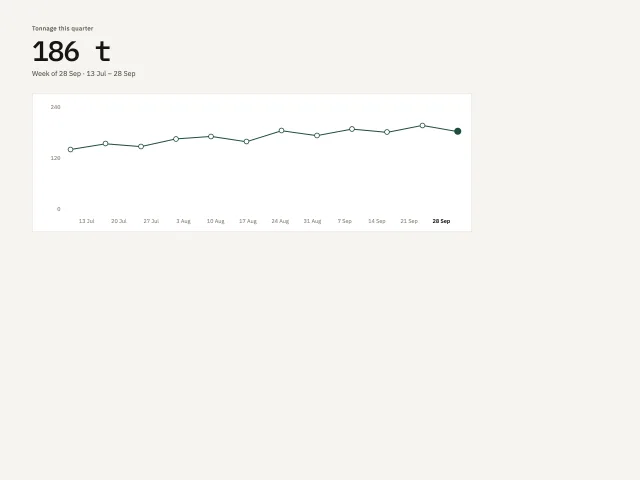
Twelve weeks of tonnage as one stroke. The latest week is a 56px number. The line is the evidence under it, not a second headline.
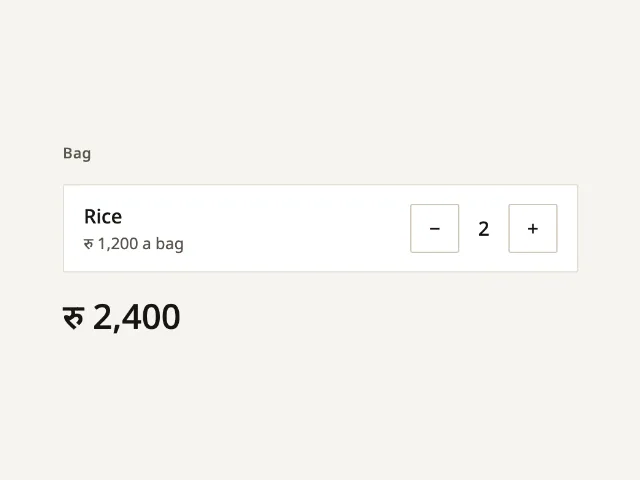
Rice at रु 1,200 a bag, starting at 2. Minus and plus step by one, from 1 to 8, and the line amount follows.
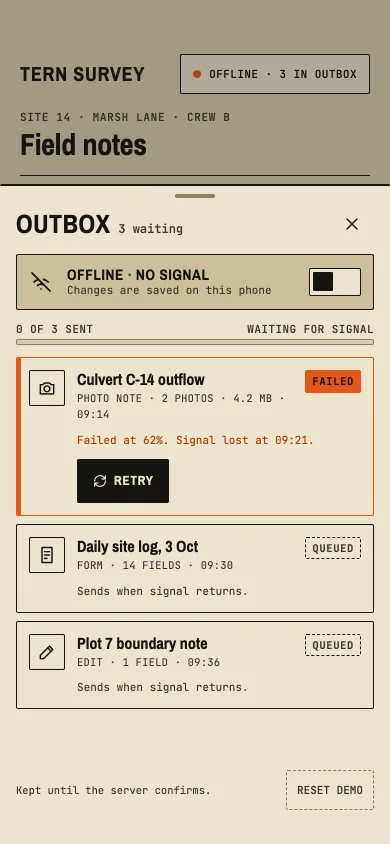
An offline outbox sheet for a field-notes app: queued, sending, failed with retry, conflict with keep mine or theirs, and sent, sending one by one when signal returns.
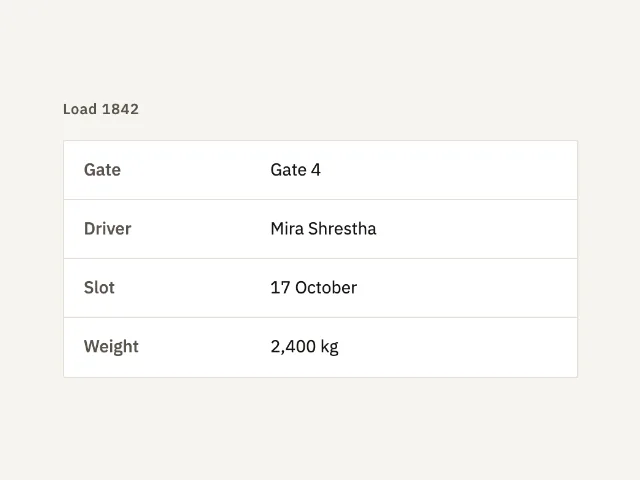
Four facts of load 1842. Gate, driver, slot, and weight, each a label and a value on one row. The label is quiet. The value is the ink.
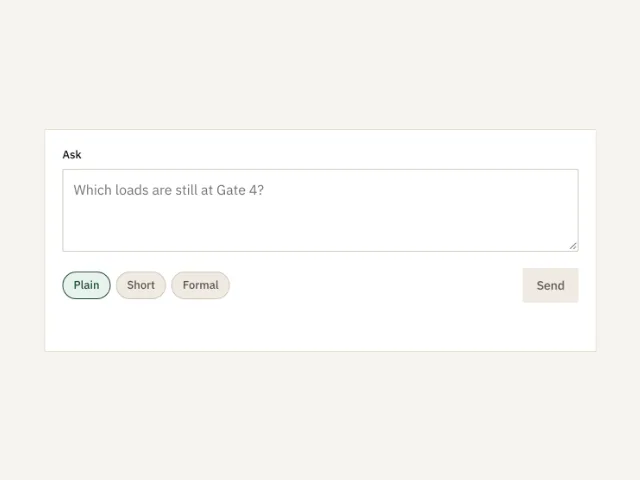
A 640px ask box. Plain, Short, or Formal. Send stays off until there is text, then reports the tone and the count.
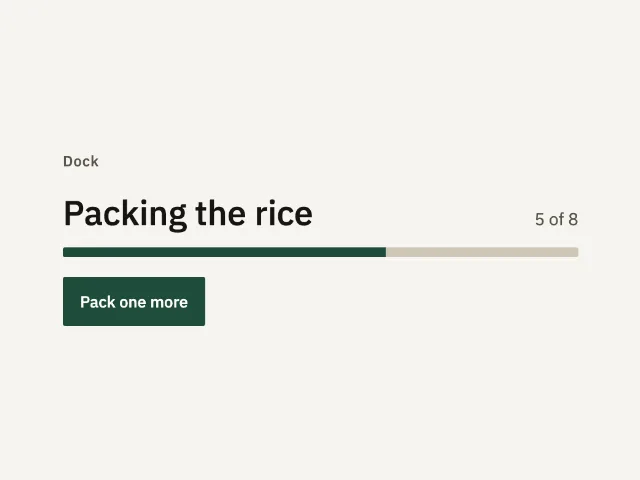
Packing the rice, 5 of 8. Each click fills the bar by one bag. At 8 the button stops and the line says all the bags are packed.
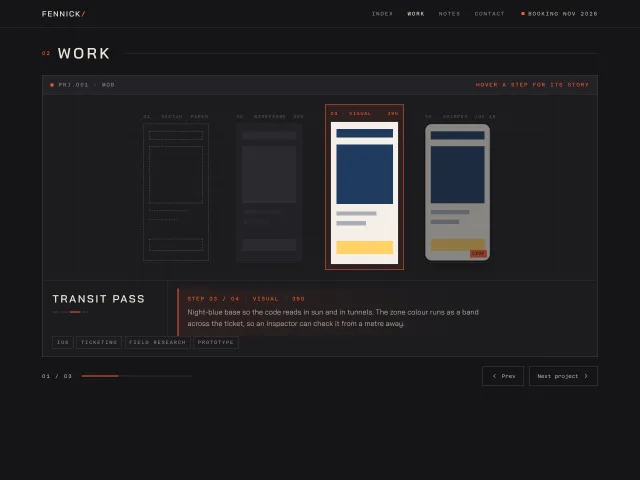
A portfolio case panel: a project's steps from sketch to shipped sit side by side as artboards; hover or focus one to light it and swap in its story.
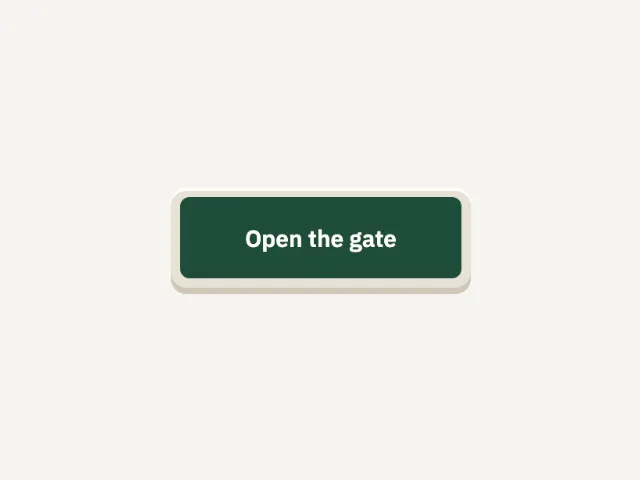
Open the gate sits in a recessed well. Press and the button drops 4px. Click says the gate opened.
No pieces match those filters. and try again.
The MCP server gives your agent 600+ pieces, the themes and the review tools. It installs the skill too. Free, no account.
claude mcp add -s user design-lounge -- npx -y design-lounge-mcp@latest For Claude Code. Cursor, Codex, VS Code and ChatGPT, or the skill alone.